She took nineteen seconds to reach the median.


Thursday, 8:40 AM, Broadway at West 96th Street. I had a bench near the median, a cooling coffee, and a pigeon who clearly believed he held the lease.
A woman of about seventy stepped off the curb as the white walking figure lit up. Camel coat, canvas tote on her left shoulder, grey shoes with laces that looked new. The office crowd flowed past her on both sides like water around a post.
She reached the median as the countdown hit zero. Nineteen seconds. The people around her had done it in about twelve. I count these things. It is why I tend to sit alone on benches.
The time was not her tell. The stride was: short, careful steps, feet skimming the asphalt, arms almost still.
SEEING THROUGH
The Short Stride
EVIDENCE: STRONG ■■■ · Nine cohorts plus one large trial
Each step covered maybe a foot and a half. Her arms stayed at her sides, which is what arms do when all the attention has gone to the ground. She was not unsteady. She moved like someone who had quietly budgeted every step.
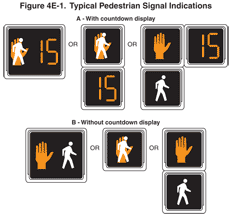
Now the complication. The tote pulled at one shoulder, the pavement was wet from an early shower, and a crosswalk is not a clinic hallway. Any of that slows a healthy walker. The signal was not built around her either. Federal guidance times the flashing countdown for someone covering about 3.5 feet per second. One morning tells me almost nothing about one woman. Thousands of people tell researchers quite a lot.
Underneath
What the body is doing, in three steps
The best-known study here pooled nine long-running cohorts: 34,485 adults aged 65 and over. Each walked a short course at usual pace and was followed for 6 to 21 years. Walking 0.1 meter per second faster, about four extra inches each second, came with roughly 12% lower risk of death. Among 75-year-old men, predicted ten-year survival ran from 19 in 100 at the slowest pace to 87 in 100 at the fastest.
That is association, not proof. Pace predicted survival about as well as chronic diseases, smoking, blood pressure and hospital stays combined. It likely summarizes hidden problems rather than causing them. The one large trial, LIFE, enrolled 1,635 inactive adults aged 70 to 89. A walking and strength program cut the share who lost the ability to walk a quarter mile from 36 in 100 to 30 in 100 over 2.6 years. Serious health events were similar, and survival was not tested.
If the pattern is left alone
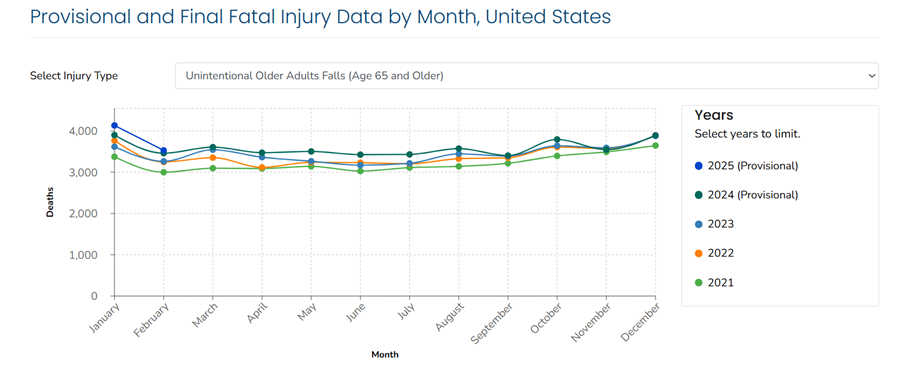
Figures are sourced in the evidence log below. The falls line covers all adults 65 and over.
Mark about 13 feet, or 4 meters, along a hallway. Start standing still at one end. Walk to the other at your ordinary pace, not your someone-is-watching pace. Count the seconds. Do it twice. Write both numbers down with the date and the shoes you wore. Then notice one more thing: whether your arms swung on their own.
Field Prescription
One action. Then take it to a professional.
Repeat the hallway walk once a week for the next month: same shoes, same time of day. Keep the numbers on one sheet of paper. At your next checkup, hand the sheet over and ask two questions. Is my walking pace worth tracking? Is there anything in my strength or balance you would want to check?
File status: open
I never learned where she was headed, or what was in the tote. The research can't yet say whether walking faster on purpose adds years; it says pace keeps track of them. She crossed the rest of Broadway on the next light. Tomorrow I cross to the other ledger: the hand in the second before it pays.
Evidence log

 CDC